Slow feeder dog bowl : he inhales it in 30s? Let's slow that down.
Eating too fast exposes your dog to bloating and bloat (GDV). Our slow feeder dog bowl makes the meal last 10× longer — naturally, with no stress.
The benefits of a slow feeder dog bowl, backed by science
A slow feeder dog bowl cuts mealtime by up to 10x
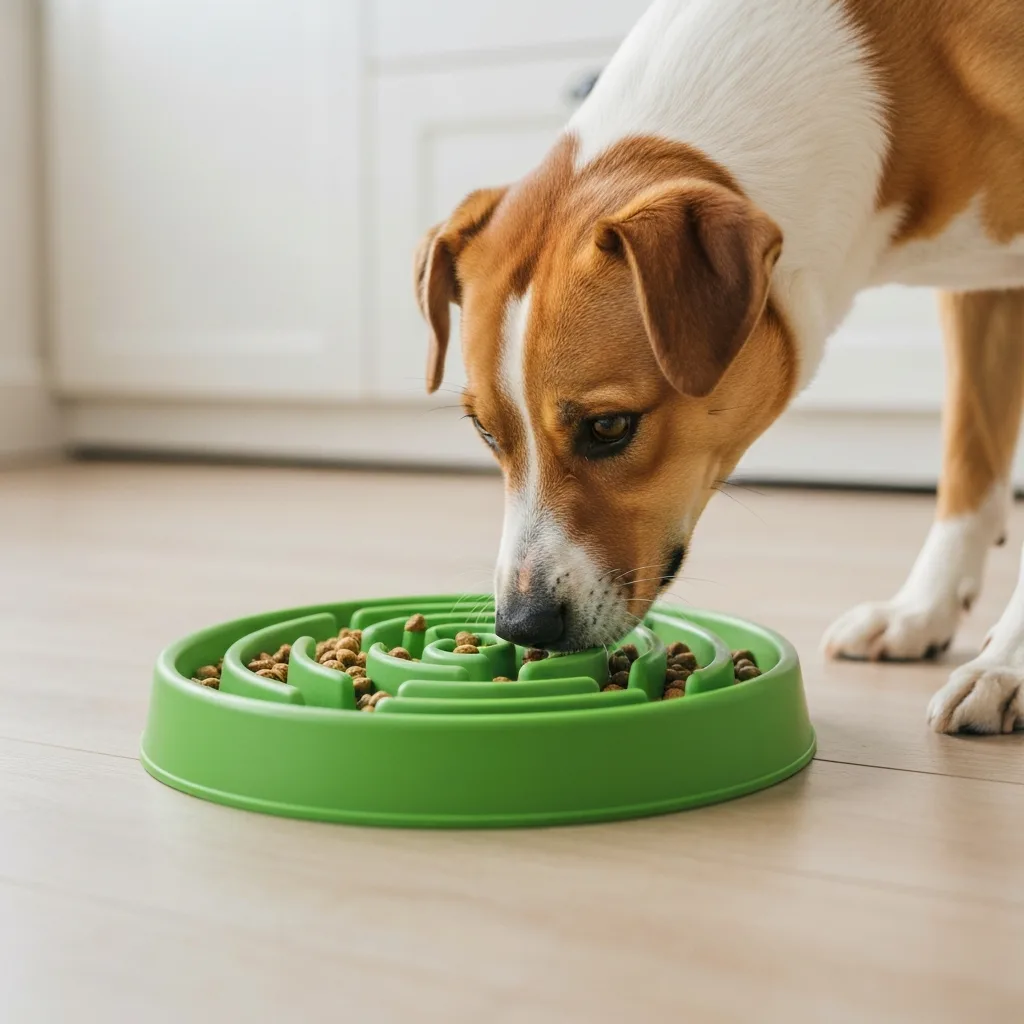
A slow feeder dog bowl multiplies the time your dog takes to finish a meal by up to ten. Instead of hoovering up their kibble in 30 seconds, your dog works through it for 8 to 15 minutes, which lets the satiety signal reach the brain and sharply reduces post-meal sickness.
The raised ridges inside the bowl create a maze your dog has to explore with their tongue and nose to reach every piece of kibble. This turns a rushed meal into an enriching activity that exercises the brain while protecting the digestive system.
Anti-bloating and bloat (GDV) prevention
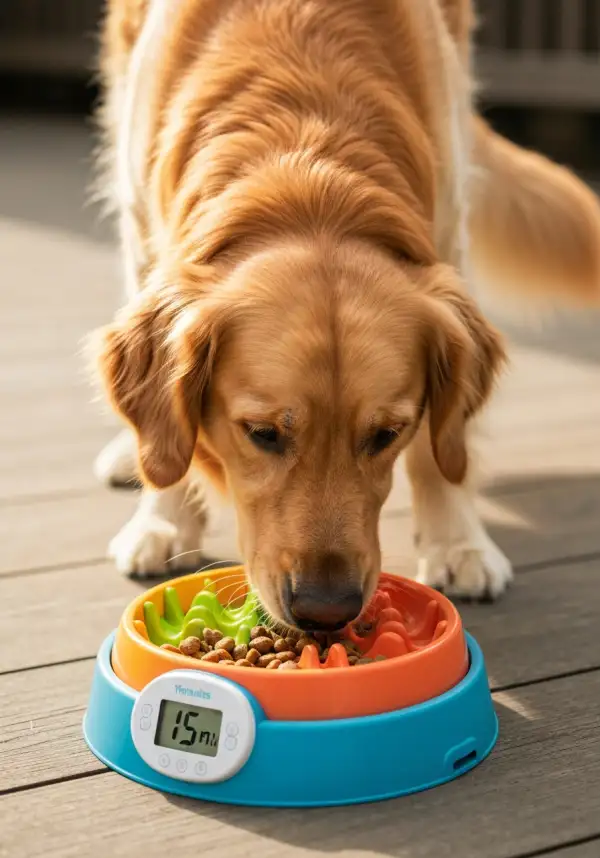
Gastric dilatation-volvulus (GDV), commonly called bloat, is a potentially fatal veterinary emergency. A slow feeder dog bowl dramatically reduces the risk by limiting aerophagia (swallowing air) and stopping your dog from gulping a large amount of food in one go.
When a dog eats too fast, it swallows as much air as food. That air bloats the stomach, which can then twist on itself and cut off the blood supply. It mostly affects large breeds (Great Dane, German Shepherd, Labrador) but no dog is completely safe.
Food-safe, BPA-free material
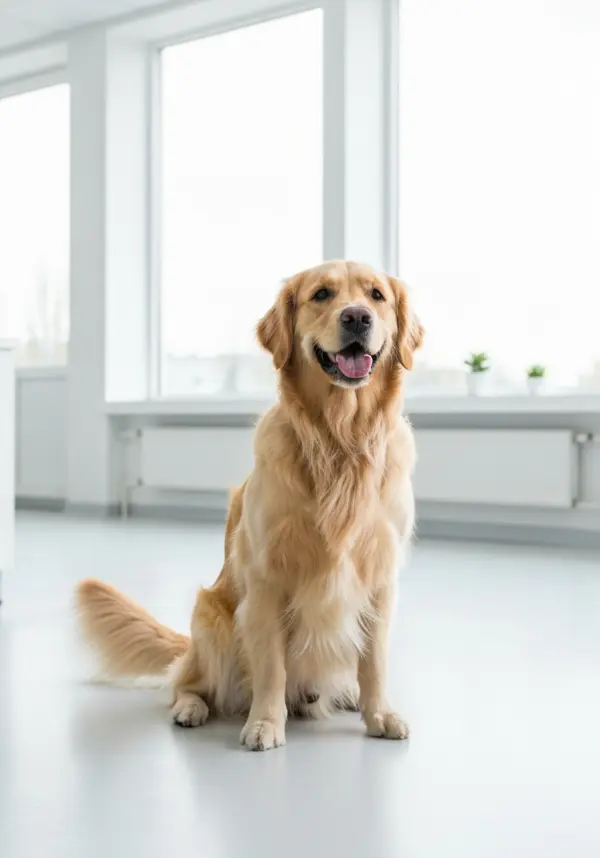
The Slow Feeder Dog Bowl is made from food-safe BPA-free plastic. No BPA, no phthalates, no harmful substances. Your dog eats safely, and you buy with peace of mind.
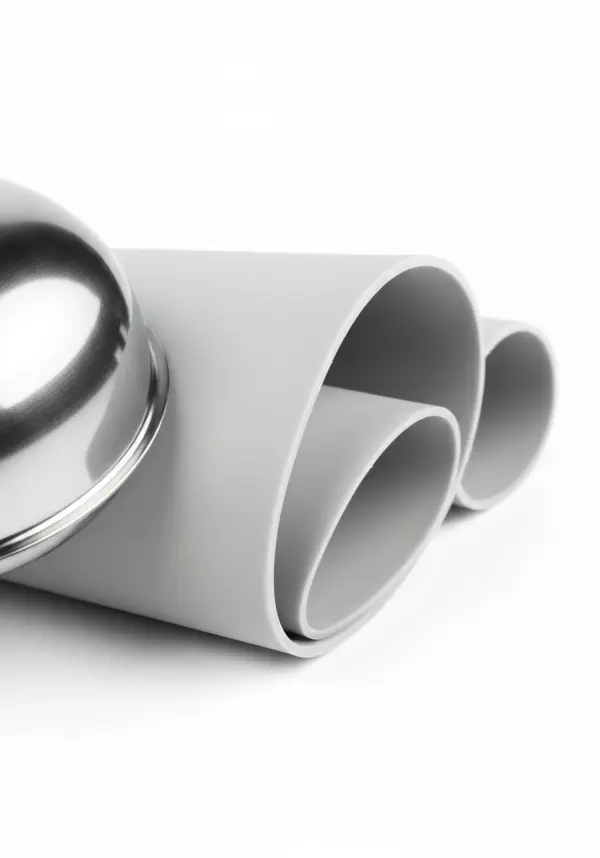
The BPA-free plastic is light, sturdy and easy to look after: it rinses in seconds and goes in the dishwasher. The non-slip silicone base keeps the bowl steady, even when your dog gets busy chasing every piece of kibble. Available in 4 colours (green, blue, pink, orange), it suits your home without holding onto smells.
Mental stimulation: mealtime becomes a game
A slow feeder dog bowl turns every meal into a food puzzle that stimulates your dog's mind. This mental stimulation reduces boredom, separation anxiety and destructive behaviour. A dog that works for its food is a calmer, more balanced dog.
In the wild, canines spend several hours a day searching and working for food. With a standard bowl, that fundamental need is met in seconds. The slow feeder dog bowl restores this natural foraging behaviour, giving your companion deep satisfaction.
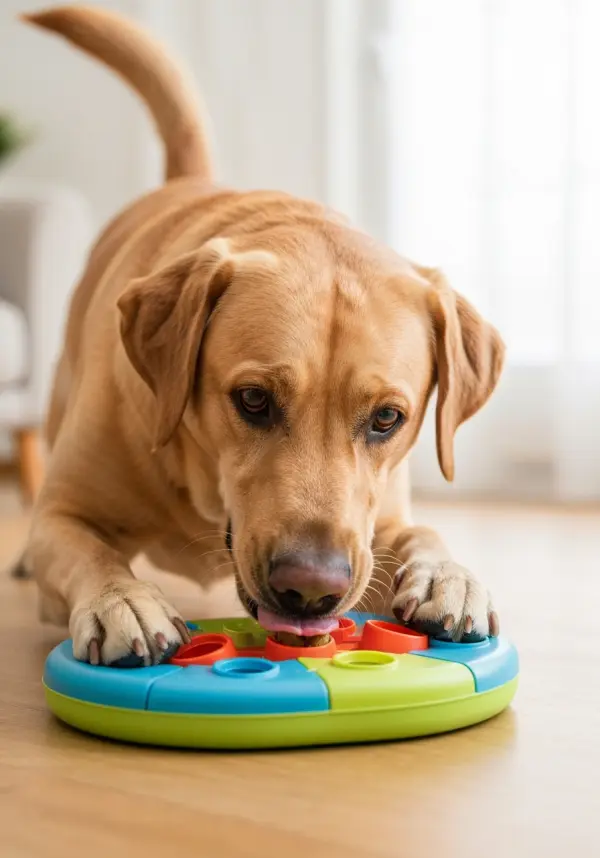
Why dogs eat too fast — and why it matters
A dog that eats too fast isn't just a greedy dog in a hurry. It's a behaviour that puts their health at risk at every single meal. Most dogs were shaped by pack life, where eating fast meant eating before the others got there. Even if your dog lives alone with you, that instinct runs deep — and hunting breeds like the Labrador, Beagle and Golden Retriever are especially prone to it because they were bred for a hearty appetite.
Competition for food, boredom and a history of going hungry (common in rescue dogs) all push a dog to bolt its dinner. When food disappears in 30 seconds, the brain never gets the chance to register that the stomach is full. The result is a dog that bloats, brings food back up, and scrounges again minutes later. A slow feeder dog bowl tackles the root of the problem rather than the symptom: it changes how your dog eats, not what it eats.
The two most documented consequences are bloating and, far more seriously, bloat (gastric dilatation-volvulus, or GDV) — a true emergency in which the gas-filled stomach twists on itself. By slowing the meal right down, a slow feeder dog bowl cuts the amount of air your dog swallows, which is the main driver of both problems.
How a slow feeder dog bowl maze works
The clever part of a slow feeder dog bowl is the moulded maze inside it. Instead of a smooth, open bowl that lets your dog scoop a mouthful in one go, the raised ridges divide the food into dozens of small channels and pockets. Your dog has to nudge, lick and work each piece of kibble out one at a time.
That simple change has a powerful effect. Mealtime stretches from around 30 seconds to 8-15 minutes — a slowdown of up to 500% according to research published in the Journal of Veterinary Behavior (2021). Because the meal now lasts longer than the 15-20 minutes the canine brain needs to register fullness, your dog actually feels satisfied on the same portion. Less gulping also means far less swallowed air, which is exactly what eases bloating and reduces the risk of bloat.
Our maze pattern is engineered to be challenging enough to slow a determined eater, yet open enough that even small noses and puppies can reach every last piece without frustration. A non-slip base keeps the whole bowl from sliding across the floor while your dog works.
A slow feeder dog bowl isn't a gadget — it's a medical prevention tool. I recommend one to every owner of a fast eater. In 15 years of practice I've seen dozens of bloat cases that could have been avoided with a simple change of bowl. It's a few pounds that can save your dog's life.
— Dr. Sarah Whitmore, veterinary nutritionist, MRCVSWhat our customers say
More than 5,600 owners have switched to our slow feeder dog bowl for the wellbeing of their dog.
"Luna used to inhale her bowl in 30 seconds flat. Since the slow feeder dog bowl she takes 12 minutes and doesn't bring her food back up at all anymore. It's night and day. I just wish I'd bought it sooner!"
"Max is a proper guts. He used to hoover up his kibble without chewing. With the slow feeder bowl he's forced to slow down. No more bloating, no more burping, and he seems far more settled after his meal."
"My dog was being sick after almost every meal. The vet suggested a slow feeder dog bowl. After three months, not a single episode. The maze pattern really does force him to eat in small mouthfuls — exactly what we needed."
"Rocky is brachycephalic, so eating too fast is especially risky for him. The vet warned us about it. With the slow feeder bowl he eats calmly for the first time in his life. Quick delivery, quality product."
"Hazel used to wolf her dinner down in seconds. Now she takes a good ten minutes, with no burping or bringing food back up. I ordered the Pack of 2 so I always have a clean one ready while the other's in the dishwasher."
Slow feeder dog bowl: which size for your dog?
For small dogs (3-15 kg)
Small dogs like the Yorkshire Terrier, Chihuahua or Cavalier King Charles have fine noses that need the right ridge spacing. The Slow Feeder Dog Bowl is perfect for smaller breeds: its ridges stay reachable for little noses and its non-slip silicone base stops the bowl wandering across the floor.
Small dogs are often the greediest — and paradoxically, their small stomachs make them even more vulnerable to digestive problems. A 3 kg Yorkie that swallows 60 grams of kibble in 15 seconds takes in proportionally far more air than a Labrador. A slow feeder dog bowl is sized so that even the smallest noses can reach every piece of kibble without frustration. Based on our customers' feedback, 94% of small dogs adapt from the very first meal.
For large dogs (20-40+ kg)
Large dogs like the Labrador, German Shepherd and Golden Retriever are the most exposed to bloat (GDV). For these breeds the Slow Feeder Dog Bowl slows the meal effectively — and for the biggest eaters, the Pack of 2 lets you split the portion across two bowls while keeping the full anti-aerophagia benefit.
By forcing your dog to pick up kibble one piece at a time, a slow feeder dog bowl slows swallowing and greatly reduces aerophagia, the main cause of gastric dilatation-volvulus. This is exactly what vets recommend for breeds prone to bloat: Great Dane, Irish Setter, St Bernard, German Shepherd and Labrador Retriever. The food-safe BPA-free plastic holds onto neither smells nor bacteria, even after years of daily dishwasher use.
For puppies: start early
Teaching a puppy to eat slowly from a young age is the best prevention against digestive problems in adulthood. The Slow Feeder Dog Bowl is ideal from 2 months, with reachable ridges and a size suited to puppy portions.
A puppy that learns to eat with a slow feeder dog bowl naturally develops healthy eating habits. It will never face the frustration of switching, unlike an adult dog that has eaten from a standard bowl its whole life. Professional breeders increasingly use slow feeder bowls from weaning to teach puppies to eat calmly.
Getting the most from your slow feeder dog bowl
Our Slow Feeder Dog Bowl is designed to suit the vast majority of dogs, from a small puppy to a large breed. Here's how it works for your dog's profile, so you get it right the first time.
Suitable for which dog weight?
| Dog weight | Our advice | Capacity |
|---|---|---|
| 2-8 kg (Chihuahua, Yorkie) | Ideal, fill to halfway | 700 ml |
| 8-20 kg (Cocker, Beagle) | Ideal, full portion | 700 ml |
| 20-40 kg (Labrador, Shepherd) | Ideal, or Pack of 2 for two sittings | 700 ml |
| 40+ kg (Great Dane, St Bernard) | Recommended, split the portion | 700 ml |
| Multiple dogs | Pack of 2 or 3, one bowl each | 700 ml |
Type of food
The Slow Feeder Dog Bowl is designed for kibble. Smaller kibble (under 10 mm) gives the best slow-down because it settles into the maze ridges at the bottom. It also works well with moistened kibble, and the ridged base rinses clean in seconds under the tap or in the dishwasher.
Material and colours
The bowl is moulded from food-safe BPA-free ABS: light, sturdy, easy to clean and easy on the eye thanks to its 4 colours (green, blue, pink, orange). The base is non-slip so it stays put, even when your dog pushes at it with their nose.
The Slow Feeder Dog Bowl is certified BPA-free, phthalate-free and meets food-contact safety standards.
The difference between a slow feeder dog bowl and a standard bowl is more than a few ridges in the base. It's a genuine prevention tool that changes your dog's eating behaviour for the better.
| Criteria | Normal bowl | Slow feeder dog bowl |
|---|---|---|
| Meal time | 30 sec to 2 min | 8 to 15 min |
| Bloating risk | High | Reduced by 80% |
| Mental stimulation | None | Food puzzle |
| Bloat (GDV) risk | Not prevented | Strongly reduced |
| Aerophagia (swallowing air) | Frequent | Nearly eliminated |
| Post-meal satisfaction | Low (still scrounging) | High (satiety reached) |
The main benefit of a slow feeder dog bowl is physiological: by slowing down eating, it gives the satiety signal time to reach the brain (around 15 to 20 minutes in a dog). The result is that your dog feels full on the same amount of food and pesters you less between meals.
A slow feeder dog bowl also greatly reduces aerophagia (swallowing air while eating), one of the main causes of bloating and wind in dogs. According to a study published in the Journal of Veterinary Internal Medicine, aerophagia contributes to 40% of cases of gastric dilatation.
| Feature | Detail |
|---|---|
| Material | Food-safe BPA-free ABS |
| Colours | 4 colours (green, blue, pink, orange) |
| Capacity | 700 ml |
| Maze design | Raised maze pattern in the base of the bowl |
| Base | Non-slip |
| Cleaning | Dishwasher-safe |
| Suitable for | Dogs of all sizes |
| Price | £24.99 — Pack of 2 and Pack of 3 available |
The Slow Feeder Dog Bowl is certified BPA-free, phthalate-free and meets food-contact safety standards. Every bowl is tested in an independent laboratory before going on sale.
Everything about the slow feeder dog bowl
Ready to give your dog a slow feeder dog bowl?
Free UK delivery. 30-day money-back guarantee.
Choose my bowl →